About Me

My photo
Tacoma, Washington, United States

Sunday, October 30, 2016

Transferring to the University of Washington


In September of 1943 we were required to select our major.  I debated for quite a long time between Naval Architecture and a line officer’s commission, Civil Engineering and a request for the Colorado University at Boulder (in my basic Engineering Drawing class I had gotten interested in bridges and dams), and Aeronautical Engineering which would result in an aviation specialist commission.
The latter won out.  First because airplanes and flying were my first loves and, second, because the best aeronautical engineering school would be the University of Washington in Seattle and I would be within reasonable commuting distance of Vancouver for weekends and leaves.  In that regard I was influenced, I must admit, by Shirley’s urging that I do that.  I made application for transfer to the University of Washington in aeronautical engineering on September 16th, according to my very brief little diary.
By that time, I had bought my grades back up to close to a 4.0 and that placed me high on the list for choice of transfer.  Captain Burnett, the V-12 commanding officer, approved my request and on 15 October when the trees on the Notre Dame campus were a glory of fall colors, my transfer came through approved.  The semester ended the following week.  After saying my goodbyes to Rossi, Brother Justin, the blonde softball player, and the lady at the Music Box organ, I left for Vancouver on the 20th of October on three days delayed orders before reporting to the V-12 unit at the University of Washington on November 1st.

Saturday, October 29, 2016

Getting to Notre Dame


Chapter 34

University of Notre Dame – 1943


Never in my wildest dreams would I have imagined that one day this old Ozark boy would walk onto the campus of fabled Notre Dame as a student.  When I alighted from the bus and walked through the main gate under the huge leafy trees of the big quadrangle, I was walking as if in a dream.  There before me was the gold leaf covered dome of the administration building and surrounding the main quadrangle were traditional old dormitory and classroom buildings.  Some were of stone and some of ivy-covered brick.  In the distance to the right I could see the football stadium that was familiar from newsreels of triumphs of the “Fighting Irish”.  (The famous Knute Rockne had passed on and it was the era of coach Frank Leahy.)

When I reported to the executive officer of the V-12 unit, a lieutenant commander, he was delighted to find that I was an experienced fleet sailor. Most of my classmates would be youngsters recruited fresh out of high schools.  The Exec promptly pu me to work helping to form the class.  (It also turned out that I was one of the older men in the class and it was no me who became known as “Pappy” Frieze, a cognomen I would carry all the way through V-12 and midshipman’s school until commissioning when I would become just another young ensign.)

It was on the morning of my second day at Notre Dame that I swore at a Naval officer for the second, and last, time.  (The first was that young ensign who didn’t know where the master switch was on PBY 71-P-7 starting out the “Hogan’s Goat” flight.)  I came into the V-12 office to assist with the class “Watch, Quarter, and Station Bill”.  When I appeared, the Exec’s yeoman casually said, “Hey, Frieze—too bad about that second set of orders.  Would have liked to have those myself.”

I stopped dean in my tracks.  “What second set of orders?!”

“Geez,” the yeoman said, “thought you knew about it.  Your orders to flight school came yesterday.  The exec sent ‘em back.

“He WHAT?!”

Sent ‘em back.  He said that your orders to V-12 too precedence even though the orders to AP flight school were dated first.”

Without hesitation I bolted into the exec’s office.  He was working on some papers at his desk.  I do not recall my words but they spilled in a torrent, some as purple as my face no doubt was, to the effect that I should have had a choice in the matter.  The lieutenant commander carefully laid down his yellow pencil, leaned back in his chair, ad heard me out.  He did not speak until I ran out of breath then his words were terse.”

“You through, sailor?”

“Yessir—I guess so.”

“Then sit down!”

I did so, clutching my white hat between my knees and knowing I had lost my temper.

“Now look, I will only tell you this once.  If you went to flight school, you would wind up this war nothing but a journeyman throttle jockey.  If you didn’t get your butt shot off by a Zero—and the woods are going to be full of ex-service pilots when the world is over.

“On the other hand, if you can hack it in V-12—and about one out of three of you won’t—you are going to get a fine college education in the major of your choice—all paid for by Uncle Sam.  If you took those flight school orders instead of V-12, you would be a whole lot dumber than I think you are!  Besides, once you get your commission you can apply for flight school as an officer if you are bound and determined to fly.  War will likely be over by then—we hope—but I do believe it can be won without you out there.  Any questions?”

The officer waited patiently while I fiddled with my white hat and thought about it.  I knew he was right.  I suddenly flet stupid about my tirade.  It would have been a dumb old country boy mistake.  I came to my feet, stood at attention, and said simply, “Nossir!”

The lieutenant commander smiled faintly as he picked up his pencil and turned back to his papers.  “All right, Frieze, we’ll have men arriving all day.  Get out there and help Williams figure out the which dorm to put them in.  By the way, you know that you have to revert to apprentice seaman in the V-12 program so get that first class “crow” off your uniforms.  Carry on, seaman!”

That evening I sat in my room in one of Notre Dame’s ivied dormitories and, with a razor blade, took off both the first class AMM badges and two of the three white strips on the cuff of my dress blues.  I also had to find a tailor to put the white seaman’s stripe around the left shoulder of my blues and the blue one on my whites.  It was difficult to adjust to being a “boot” once more—especially on payday when I would drop from more than a hundred dollars back to the apprentice seaman’s pay of twenty-one dollars a month!

Coming as I had almost directly from the war in the Pacific and the crude living conditions in Dallas hut C-4 on Ile Nou, Notre Dame was a dream come true.  We bunked tow men to a room in the first brick dormitory building to the left of the main campus gate.  My roommate was a slender, black-haired New Yorker named Rossi.  He was a pleasant young fellow and we explored the campus and went on liberties together.

All the buildings were old, but they and the spacious campus grounds were immaculately kept.  Down a slope from the main quadrangle was the grotto with a statue of the Virgin Mary overlooking a lake beyond which lay Saint Mary’s, the Catholic female equivalent of Notre Dame.

Except for the specialized Navy classes conducted in a new building west of the main quadrangle, our classes were taught by either priests or lay brothers in their black robes and crucifixes.  They showed no bias about we non-Catholics and at no time during my two stays at Notre Dame was any effort made to convert me to Catholicism.  [It is possible that the conversion had happened the other direction 350 years before.  Rumor has it that our earliest ancestor coming to the New World, Francis Perkins, was a part of the Gunpowder Plot in England and hence had to flee.]

The only daily reminder we had that Notre Dame was a Catholic university was that each class was begun by an “Our Father” recited in unison.  To me, of course, it was the Lord’s Prayer and thoroughly familiar, with one exception that embarrassed me the first morning of classes.  The “Our Father” does not include the last line of the Lord’s Prayer, “For Thine is the Kingdom, the Power, and the Glory forever and ever.  Ah-men.”  When we got to that point in Brother Justin’s English class, I rattled right on with the last line loud and clear causing everyone to turn and look at me.

Mortified, I muttered something like “I’m sorry, Brother Justin, you see I am a Protestant.”

Brother Justin, whose huge bulk in the black robe made him resemble Friar Tuck in the stories about Robin Hood, simply smiled kindly and said, “You will find, Mr. Frieze, that will not be held against you here.”  Then he eyed my slender frame, patted his fat belly, and added, “We shall get together sometime and perhaps you can pass along your secret of girth control!”

In actual fact, I did spend some non-class time with Brother Justin.  He and many others of the staff were quartered in an English motif grey stone building during that semester and later when I came back to Notre Dame for midshipman’s school, I sat in the lounge there with him and Brother Justin introduced me to the game of chess.


Our Saturday night and weekend liberties in South Bend were not as raucous as those in Chicago but it did not take Rossi and I long to find a favorite “watering hole”.  The South Bend of those days centered around the LaSalle Hotel, the largest in town.  It was conveniently situated downtown.  A block north was a bowling alley which we frequented.  One block west was a street having some bars and taverns.

Our watering hole to replace the Crown Propeller Lounge in Chicago was one called “The Music Box”.  It featured a long bar behind which was a small red-draped stage containing an organ.  The organist on Friday and Saturday nights was a pleasant elderly lady who had an extensive repertoire and was pleased at requests, most especially when they were accompanied by a fresh drink.  The first couple of evenings we spent there, I promptly requested my favorite, “Sentimental Journey”.  That lady had a memory for more than music.  From then on, like the combo at the Crown, when she saw me come through the door she would welcome me by swinging into that song.  (No, doubt it was the campaign bars on my blouse because, on twenty-one dollars a month, I did not have much extra money to buy her drinks.)

Our meager funds were another reason we frequented The Music Box.  They had an ex-pug in the kitchen that cooked the best bar chicken I ever tasted and, with a drink, it was dirt cheap.  That was often our supper.  Of course the fact that the Bendix Company had a factory near South Bend that employed a lot of the “Rosie the Riveters” during the war and some of them were regular patrons of the Music Box did nothing to scare us away!

We did not spend all our liberty time in bars or the bowling alley.  Depending on our finances, we often took in a movie, went to a ball game, or accepted home visit invitations form South Bend residents willing to entertain servicemen far from home for dinner or a picnic.  (We found to our glee that sometimes the latter would be some “Rosie the Riveter” types looking for men and some dandy parties resulted!)

There were also afternoon or evening USO dances.  At one of those I met a delightful little blonde tomboyish twenty-one-year-old whose name, I regret to say, I have forgotten.  I persuaded her to give me her telephone number to let me see her home.  She was from a home similar to mine back on the west side of Vancouver and we enjoyed each other’s company.  She belonged to a girls’ softball team and I spent a couple of Saturday afternoons watching her play.  There was, however, still Shirly waiting back in Vancouver and no real sparks flew between us so nothing ever came from that relationship except some innocent and enjoyable companionship.

Monday, October 24, 2016

An Inspection and an Examination


Although I was barely twenty-one years old and had been in the Navy less than three years, I considered myself an “old salt”.  I wore my white hat at a cocky angle over an eyebrow and my liberty neckerchief was non-regulation pressed black silk.  My tailored white uniforms were also non-regulation with wide bell-bottoms.

The imaged I had of myself was reinforced from the unlikely source one weekend shortly after we reported at NATTC.  On Friday afternoon just after we secured for the day, Lieutenant Dugan, the division officer for our class, informed us that there would be a surprise admiral’s inspection the following morning.  The class would fall in for inspection in the central passageway on the first deck.  Since the weather had turned warm the uniform of the day for inspection would be dress whites.

Come Saturday morning when I started to dress for inspection I was dismayed to find that I did not have a fresh clean suit of regulation whites.  Except for the gabardine tailor-mades I had bought in Honolulu, my white uniforms were in the laundry and for some unknown and unexplained reason our laundry, due on Thursday, had not yet come back.  Also, I could not find my regulation issue neckerchief that was worn rolled.  I had only the pressed black silk.  I knew that if the admiral was a hard-nose I could wind up on report for a non-regulation uniform but I had no choice.  I put them on.

When we fell in for inspection and Lt. Dugan looked us over, the division officer sharply ordered me to go get into regulation uniform.  I said, “Sorry, lieutenant—my issue whites are all in the laundry which didn’t come back this week.  It’s this or nothing.”

Lt. Dugan shrugged and turned away looking down the row of white-clad sailors, most of them looking as if they were just out of boot camp—many were—with baggy blouses and stovepipe-legged pants.  Their rolled black neckerchiefs were uneven and did not tie neatly.  Their crimped white hats sat squarely two fingers above the eyebrows.  They were regulation all right and were quite a contrast to my crisp white gaberdines that were pegged at the knee and had flared bell bottoms.  My white blouse was tailored to my slender frame so that I had to have a zipper under one arm to get it on and off.  The division officer shook his head and said, “Okay, Frieze,--don’t say I didn’t warn you!”

I never knew the inspecting admiral’s name but when he came down the line he had the appearance of a stern officer that went by the book.  I heard him cite two or three for non-regulation haircuts or for unsatisfactorily shined black shoes.  At least, I thought, I was in the base barber shop two days ago and I knew that the toes of my black shoes could have been used for shaving mirrors.

The admiral halted directly opposite and looked me up and down.  He took in the crimped but crisply clean white hat tilted just a bit over the right eyebrow, the three campaign ribbons over my pocket, the first class AMM “crow” and chevrons, and the gunner’s badge on my lower sleeve.  I was at rigid attention,--my back ramrod straight, my thumbs precisely on the inverted side creases of my trousers, and my gaze fixed in the distance past the admiral’s right ear.  The admiral’s scrutiny went to my bellbottom pants then he said softly, “What your name, sailor?”

I am happy to say my eyes never wavered as I responded, “Frieze, Sir,--Frieze, C.R.”

I waited for the senior officer to tell the yeoman at his elbow to take my name and offense but then my gaze fell to his as the admiral said, “Been in the Pacific, eh?”

“Yessir—two years, admiral.”

“Well done, son.”

Then the grey-haired admiral made my day.  He turned and looked back alpong the long line of baggy regulations uniforms, then turned to Lieutenant Dugan.  “Now there, lieutenant,” the admiral said mildly, “is a sailor!”

I never knew the admiral’s name but I went on liberty that Saturday evening feeling as if he had given me the Congressional Medal of Honor—or at least a Navy Cross!  Dutchy and I celebrated sufficiently after she got off work at the lounge that I did not make it back to 87th & Anthony until after noon Sunday.  I woke up in Dutchy’s tiny apartment in the murphy bed between she and her blonde roommate Alicia.  “Allie” was a bit out of sorts that morning because she had not been able to find her nightgown the night before.  The missing nightgown bothered her a lot more than getting from bed to the bathroom stark naked.  I got my bellbottoms on and the three of us had breakfast before I headed back to NATTC.  It was a causal relationship and Dutchy, Allie, and I kept it that way.  The two were more than used to the sailors who came and went as the war went on.

One afternoon, still in April I believe, the NATTC education officer came looking for me.  The eager young lieutenant junior grade explained that he had been going thorough personnel records and he believed that with my high school record, I should apply for the Navy V-12 officer training program.

Until then I had never heard of the V-12 program.  When the lieutenant explained that it was a training program that would provide a complete college education to officer candidates followed by a commission in the Navy after midshipman’s school.  I tipped back my head and laughed.

“Hell, lieutenant, sir, I ain’t a college boy—I’m a fleet sailor!  They say they’ll make me a CPO when I get out of here in two months, then I can help form a new squadron and go back out to fight the Japs.  That’s where they started it and I aim to be there when we end it!  Besides, I got my application for AP school to learn to fly.”

Looking at the record of my high school grades that was in the personnel file in his hand, the JG—as I recall—said something like, “Okay, Frieze.  Fine.  Do me a favor though—let me fill out the application for the program.  You may not make it anyway.  They only need sixteen people form here this spring.”

Somehow that riled me a bit.  I thought about my Annapolis ambitions, the preparatory courses that I had taken in high school, and the injustice of my Annapolis examination being burned during the Japanese raid on Hawaii. I laughed and said, “Okay, lieutenant.  Fill out the papers and I’ll take the exam!”

The next Friday evening Byrd, Rineman, and I were at our usual table at the Crown Propeller Lounge.  I was reasonably sober when we got back to 87th & Anthony but, I must admit, had a pretty fair hangover the next morning when Rineman woke me and said, “Hey, Frieze, aren’t you supposed to be taking that examination today?”

I groaned.  It was nearly oh eight hundred and the examination was scheduled for 0830.  I had a quick shower, but was still foggy when the education officer put the examination packet in front of me.  

It was not a snap exam.  There were sections on English, American History, World History, Geography, and Mathematics through solid geometry.  The answers came hard to my aching head.  At the four-hour deadline I turned in my papers with the thought, “Well, that takes care of any chances to go to officer candidate school!”

I went back to my classes on Monday feeling sure that I did not have a chance at V-12.  I recall clearly that I had just finished a class on the Stronberg-Carlson pressure injection aviation carburetor when I encountered Rineman in the passageway.  “Hey, Frieze,” he said, “they just posted the results of that exam you took for V-12.”

It wtas not exciting news and I figured that I probably finished way down on the list; however, I went by the bulletin board to have a look.  The names were listed in order of grade and a red line had been drawn beneath the sixteenth name.  To my astonishment that sixteenth name was “Frieze, C.R., AMM1/c”!

It was dizzying news.  I immediately called my parents to tell them I was going to go to college.  I also called Shirley and told her to put aside any wedding plans.  Officer candidates were not allowed to be married until they received their commissions and, going to school year ‘round, college and midshipman’s school would take more than three years.  I offered to break off the engagement, but she would have none of it and insisted that she would wait.  I let it ride.

On 21 June 1943 my orders arrived.  I was to report to the University of Notre Dame ion South Bend, Indiana, for my pre-major semester in the Navy V-12 college training program.  The orders included a seven-day delay enroute.  That was not enough to make a trip back to Vancouver, but I did not care.  I decided to go down to the Ozarks to see my grandparents and relatives.  I took the train to Kansas City, then the bus to Greenfield.

I had deliberately not notified my grandparents, but wanted to surprise them and easily found their little white house a block off the courthouse square.  When I walked up carrying my zippered blue ditty bag, Grandpa Stanley was out back painting the tailgate of the small pickup truck that he had in retirement.

It was a joyful reunion and my grandparents were flabbergasted when I told them that I was on my way to college.  I recall clearly that Grandpa blew his nose on his red bandanna and said, “Well, boy, we have been real proud of you and Richard and now we are especially proud of you!”  Grandma promptly got a dozen eggs and made me one of her fabulous angel food cakes.
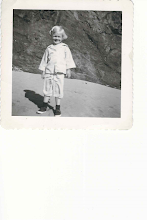
The author's grandparents in Greenfield, MO 1943


We had three pleasant days of visiting.  The weather was clear and balmy and one evening we sat out on the front porch.  At my urging, Grandpa got out his old violin and played several pieces that had people stomping on the street in the twilight to listen.  His “Marching Through Georgia” was rousing and toe-tapping and when he played “Amazing Grace” there in the still and balmy twilight you could see and hear bagpipes in the Scottish Highlands.  (My mother told me in later years that it was probably the last time he touched his fiddle.  He already had the first signs of a terminal illness and died the following year.)

Sunday, October 23, 2016

Naval Aviation Technical Training Center in Chicago


Chapter 33

NATTC, Chicago – 1943


When I arrived back at the Naval Aviation Technical Training Center at 87th and Anthony ins South Chicago, the first man I encountered was an old shipmate from VP-11, J.P. Byrd.  With him was another VP-11 man, Rineman.  We checked in together and were assigned adjacent bunks in the second story barracks level of the huge training complex.  We would be in the same class.

J.P. Byrd was (and still is) quite a character.  He had a tall, spare, long-legged, but footed frame and shambling gait.  He was easy going and a shock of tousled brown hair topped an ever-present friendly grin on his lean face.  He was soft spoken with a sort of southern drawl and hardly ever spoke without a pun or a joke.  In his tight-fitting tailor-made dress blues with the badge of an AAM1/c, “J.P.” projected the image of the typical absent-minded professor dressed up as a sailor.  J.P. was not actually lazy, but professed to be an advocate of conservation of energy—save it because you never knew when you might need some!

Bob Rineman was a shorter man with black hair above a pleasant face.  He was also an agreeable shipmate and the three of us were to be frequently liberty companions with our first class petty officer “crows”, aerial machine gunner emblems, and campaign ribbons identifying us as veterans of the Pacific theater of war, we were accorded some degree of deference by our fellow trainees.  More often than not, they also resulted in civilians in bars insisting on buying us drinks or driving us in their cars wherever we wanted to go.  It no doubt made us a bit cocky but, with sarcastic humor, we kept each other in perspective.

Since we were, indeed, real veterans and the memories of war were still fresh, we were to be a bit embarrassed the first morning at NATTC.  Barracks were the wide open second floors of the two or three large buildings.  At each end there were large double doors leading to large landings at the wide stairways.  The three of us were assigned bunks not far inside the entry doors.  It seemed to be a convenient location but we were to find one bad flaw in it.

We did not know that first night that reveille at NATTC was held by what amounted to a small drum and bugle corps.  About six musicians, three drums and three bugles, would assemble outside the entry doors.  On the stroke of six, the doors would be thrown open and the band would cut loose while they marched the length of the long barracks down a wide central aisle way.

We were sleeping in blissful ignorance that first morning at reveille.  When the drums and bugles cut loose it was such an unholy din that shattered our slumbers that both Byrd and I thought we were in the middle of a Jap attack.  Before we were awake we hit the deck and were ten yards down the aisle ahead of the band running for cover when we became aware of where we were.  We went sheepishly back to our bunks to get our clothes to the laughter and kidding of our bunkmates.  After that episode we would hear the sounds of the band assembling outside the doors and could prepare ourselves by buying our heads under our pillows when the loud music started.

Although I continued to have ambivalent feeling about my engagement to Shirley Mills, shortly after my arrival in Chicago I decided that if it were to stand it should be formalized with a ring.  I rode the El to the loop, found a reputable jewelry store, and although my savings was dwindling, spent two hundred dollars on a small diamond rind.  (That was in 1943 dollars.  It was, I think, something less than a half carat and would probably be worth ten times that today.)

After a few drinks on the way back to 87th & Anthony I decided that the ring should not simply arrive in the mail.  I gift-wrapped it and mailed it to my brother Rex with the request that he hand-deliver it with some flowers.  He did so.

Despite the urgency of war for more trained men as the might of the United States began to flex its muscles, our classes at NATTC were on a five-day week and we had liberty every weekend.  Byrd, Rineman, and I found the classes relatively easy after our training at North Island and our two years of practical experience in VP-11 and the engine change shop on Ile Nou so we made the most of liberty in Chicago.

During our first liberty weekend, we explored the Chicago Loop area in the city, but other than movie houses and two large ballrooms, the Trianon and the Aragon, I believe they were, downtown had little more to offer than the South Side.  One weekend we did go to a professional football game at Soldier Field.  In the main we made liberty at an area of small night clubs, movie theaters, and bars at 63rd and Cottage Grove.

In the days of World War II, The Chicago South Side was still thriving.  We could walk a few blocks east and catch the train that ran between the Chicago Loop and through Gary to South Bend, Indiana.

Our favorite watering hole was a small night club on Cottage Grove called “Crown Propeller Lounge”.  (The sign outside was a neon airplane propeller.)  It was run by a retired Irish cop and featured a small live combo.  Sometimes there was a small “floor show” by an aspiring singer, magician, or standup comedian.  The waitresses were friendly, the drinks relatively cheap, and the owner always bought every second or third round for men in uniform who were veterans of the War in the Pacific.  The bandleader soon learned our favorite songs and would stop a piece and shit to one when we came in and took a table—more often than not “Sentimental Journey” which I liked and often requested.

We felt comfortably at home at the Crown Propeller Lounge and knew that we could always count on getting back to the barracks at 87th & Anthony.  On the occasions that we celebrated too much and the staff of the lounge thought we might run into a Shore Patrol or have trouble finding our way, the Irishman would call a cab at closing time and make sure we had enough money for the ride back.

Although we never got into trouble that might land us on report or in the brig, the three of us “old salts” had some high old times.  There was on chubby little waitress called “Dutchy”, a brown-haired woman about thirty, who took a liking for me.  Sometimes at the midnight closing time for bars, Dutchy and a friend would take us to one of the many illegal after-fours bars in the city.

I recall one after-hours joint in particular.  From the outside the place appeared to be nothing but an abandoned ice cream parlor.  Behind the counter the door that once led to a kitchen opened into a draped anteroom and then into a very nice nightclub with a bar, dance floor, and very good band.  Dutchy liked to dance and it was her favorite place to relax after work.

Saturday, October 22, 2016

The Big Mistake


Leave in Vancouver—Spring 1943

"It was only in later years that I came to the conclusion that I had made one of the dumb decisions of my young life.."

The world that I returned to after two years in the South Pacific was, in a sense, an entirely different world than that which I had left behind in July 1940.  Then, the economy was just coming ouf the Great Depression of the Thirties, spurred only by the pre-World War II Lend Lease program for embattled Great Britain.
The Japanese sneak attack on December 7th 1941 had unified the nation overnight and the war machinery of the United States had finally gotten into full swing.  One of the Henry Kaiser shipyards to build escort aircraft carriers (CVEs) was being built on the Columbiar River waterfront east of the Interstate Bridge across the river to Oregon.  (When it was in operation, my father quit his job at the DuBois sawmill and went to work at the shipyard as a machinist.  In later years, Dad was very proud of the fact that he helped send nearly fifty of the “jeep carriers” down the ways and off to war.)
The Vancouver Barracks Army post, successor to old Fort Vancouver, was at capacity with Army recruits in training and awaiting orders overseas.  Across the river past Hayden Island an entire temporary town of housing units called “Vanport” was being built to accommodate the influx of workers for the shipyards on both sides of the river.  Once sleepy Vancouver was busy and booming.
It was a joyous reunion with the family.  Rex had grown to match me in size and would be graduating from Vancouver High School that spring.  He had a job waiting for him—my old job at the CC Store.  Little Sandra was now a lively affectionate six-year-old and would be starting school the following fall.  Mother hand Dad were both healthy and happy.
Unexpectedly, I was also reunited with Grandpa and Grandma Stanley from the Ozarks  They had retired, sold the Bona store to Tom Humbert across the road, moved to a house a block off the courthouse square in Greenfield, and had come to Vancouver for a visit.  It was a memorable homecoming and a delightful change from the long months of war and austere living condition at Ile Nou.
In one respect, my homecoming from the Pacific was anti-climactic as had been my Christmas leave from San Diego in 1940.  After a day or two of visiting with the family, answering their many questions, and telling my sea stories of life in the Pacific, I set out to find old friends.
I was not very successful.  Elaine Eberle was away in her freshman year at the University of Washington in Seattle.  I went to see Patty Cross and delivered the grass skirt that I had picked up for her at Bora Bora.  Patty was now a senior at VHS and was very much a young lady.  Something seemed to be missing from our old relationship.  She had new friends and new interests and was planning to go to the University of Washington the following year.  We had one evening date and that was it.  I was simply a good friend from the past.
I telephone Elaine in Seattle.  She was as happy and bubbly as always and in a few minutes in her inimitable rapid-fire fashion filled me in on classes she was taking and her life at the university.  I considered hopping a train to Seattle to see her but felt that my short leave should be more directly with the family and my grandparents.
I also went back to the old hangout at Gearhart’s Drug Store.  I found none of the old gang there except little Ariel Mansfield who was now Ariel Davis, having married one of my classmates at VHS, Buster Davis.  The rest of the old group were either in one of the services or had moved away.
Although I had written her a “dear Jane” letter form Kaneohe more than a year previously, I finally telephoned Shirley Mills.  She was delighted and immediately invited me to visit her.  She was still the same full-figured, platinum-haired blonde with legs similar to Betty Grable.   She artfully arranged that our first meeting was when she was home alone.  She had dressed carefully and had soft music playing on the phonograph.  (I should have realized that “the tender trap” was set and baited when I realized that the song she had selected was “It Started All Over Again” but I was still the naïve old country boy and was simply flattered.)  I took her out a couple of evenings and accepted an invitation to go skiing at Government Camp on Mount Hood with she and her parents.
On March 18th I left Vancouver on the Great Northern for Chicago accompanied by my father.  Dad had quit his job at the sawmill and waking taking a short vacation to re-visit our old home and relatives in the Ozarks before he started his job at the new Henry Kaiser shipyard in Vancouver.  We travelled together as far as Casper, Wyoming, when he changed trains for Kansas City and I continued on toe Chicago.
Dad never concealed the fact that he like a drink now and then nor did I hide the fact that I drank occasionally.  Before we left Portland, I bought a pin of bourbon for us to have a few belts together on the train.  Dad saved the day for me when a roving Shore Patrol on the train found us in the smoking lounge and I had the bottle in my hand.
When the SP nailed me (uniformed military personnel were not allowed to drink in public and in transit) and started to take the bottle, Dad interceded.  He reached out and took the bottle and said to the SP, “Tain’t that sailor boy’s bottle, boy,--it’s mine.  I just offered him a drink.  Look at thos ribbons he has on—he has just got back from the war!”
The SP issued a warning to me and went on his way.  We waited until he crossed into the next car before we laughed, had another drink, and went back to Dad’s tales about his short time in the Army in 1918.
Upon arrival at the Naval Aviation Technical Training Center at 87th and Anthony in South Chicago, I found that the next advanced aviation machinist mates class was not due to be formed for more than two weeks.  I knew that I would be put on special work details in the meantime; therefore, I talked the division officer to whom I reported into allowing me an additional fifteen days leave.  When I told him that I had had only two weeks leave totaling less than three weeks in more than two and a half years that I had been in the Navy, the lieutenant was sympathetic and issued me leave orders for fifteen days. 
I debated going to visit our relative in the Ozarks or going back to Vancouver for two weeks.  Since my grandparents were still Vancouver and I thought “What the hell,--there I can always go out with chubby and affectionate Shirley,” the latter won out.  (It was only in later years that I came to the conclusion that I had made one of the dumb decisions of my young life.)
Back in Vancouver, I spent relaxed days with the family.  I tried going out in some of my old civilian clothes but felt alien and uncomfortable and was afraid that people would think me a draft dodger.  I went back to my familiar uniform with its AMM1/c badge, aerial machine gunner’s badge on my lower left sleeve, and the campaign ribbons.
I dated Shirley Mills several times and she became increasingly affectionate.  It bothered me at times that she also exhibited an increasingly possessive air but I enjoyed her company and her willingness to neck a bit in the old Chevrolet after a movie or dance.  I was flattered, I guess.

On the final evening of my leave, I believe I took Shirley dancing at the big band ballroom at Jantzen Beach on Hayden Island.  We probably stopped at Waddle’s for a coke or something and it was after midnight when I parked on “F” Street near her house.  She was compliant up to a point for some heavy necking.  I recall that she was wearing a mink dyed-skunk fur coat that she had bought with savings from her wartime job with a housing office.
It had been a fun leave and with her cuddled in my arms I impulsively asked, “Will you wiat and be here the next time I come home?”
She drew in a breath, went silent for a long minute, then said, “Did you just ask to marry me?”
I was momentarily stunned.  Marriage had not been in my mind.  I believe I stuttered and stammered and must Have made the mistake of not simply saying, “No, that was not what I meant.”
The next thing I knew, Shirley was talking excitedly as if it were an accomplished fact that we were engaged.  She had obviously given marriage a lot of previous thought (with me or someone else) because she knew just what church the wedding would be in, her china and silver patterns, and she already had a well-filled camphorwood carved hope chest.  She was so happily excited that the dumb old country boy simply went along with it.
I was leaving for Chicago the next evening.  IN a sort of daze, I took Shirley in the afternoon to my parents’ house and introduced her to them and to my grandparents as my future wife.  They were shocked, to say the least, but they received her graciously and said they were happy for us. J (Later, in privacy, my mother would ask me seriously if I was sure it was what I wanted to do.  When I assured her I thought it was, she just smiled wryly and said, “You are a grown man.”)

That same day, 4 April 1943, I was scheduled to leave for Chicago at 6:30 PM from the station in Portland.  Shirley and her parents, Chapin and Ruth Mills, drove me across the river and came to the platform to see me off.  The Mills seemed very happy with the engagement.  I recall feeling very awkward as we stood and chatted until the conductor called, “All Aboard!”
Shirley moved toward the door with me while Chapin and Ruth waited where they were standing.  Short of the loading steps, she pulled me to a halt, hugged me, and whispered in my ear, “I love you, Conrad.”
I was speechless.  No one but my mother had ever said that to me and I had never used the words and they would not come to my lips then.  I finally muttered, “I guess that goes for me, too.”
My ears were burning so I knew that my face was red with embarrassment as I pulled away and boarded just as the porter was ready to move the steps and close the door.  When I looked back Shirley was standing there, plump in that fir coat, smiling happily.
As that train pulled out of the station then chugged up the grandeur of the Columbia River Gorge in the fathering darkness, I felt no elation.  I soberly thought, I didn’t really ask her to marry me.  I knew, however, that I had effectively given my word by going along with it and telling the parents that we were going to get married.  It was deeply ingrained in me that a man did not go back on his word.  She was from a respectable family (her father had served in the Washington State Senate) and her apparent liking for heavy necking boded well for the marital bed.  What the heck, I thought, if she can cook and keep house I could do a lot worse.  Her full curves were nice to feel and I gave no thought to the fact that her mother was quite a heavy woman and that Shirley would have a weight problem all her life.
I cogitated also about what Shirley had said to me on the platform, that she loved me.  Did I love her?  I did not even know what love was or how one should feel in love.  I had read somewhere that if you were in love your heart would beat faster at the sound of her voice or the sight of her and that you should have a protective feeling when you looked at her.  Nothing had made my heart beat faster since that grim Sunday morning when the Japanese had come out of nowhere, laid waste in fire and explosions our airplanes and our hangars, and had caused that bloody row of bodies of my good friends under the wing of that bullet-ridden airplane.  I wondered again if I was capable of real love.  Did I have a protective feeling about Shirley?  I did not know.  Had I “gone off halfcocked’ because she was the first complaint white woman I had been with in more than two years?  I did not know.
The whole thing seemed beyond me.  The majesty of the gorge had passed unseen in the twilight outside my window and we were rolling into eastern Oregon when I mentally shrugged and stretched out to get some sleep.  My Chicago adventures lay ahead.  This time no door closed behind me, however.  I reckoned I had sort of left it propped open.