About Me

My photo
Tacoma, Washington, United States

Sunday, June 19, 2016

A Boy and His Dog Pup


The puppy was a sort of scroungy, scruffy little runt—mostly black on his back with a white belly and some brownish yellow around his ruff and his eyes.  Someone had told me that clabbered milk was good for pups and we had plenty of that.  I raised that little runt on clabbered milk and table scraps.  It must have been good for him because he grew at a prodigious rate.  By the time he was six months old that runt had turned into a big-bonded, medium sized, deep-chested dog.
One evening my father asked me what I was going to name the dog.  Up until then we had simply been calling him “the pup”, but my father said that a dog should have a proper name.  I thought about it for a long time but could not come up with anything that seemed appropriate so, by default, the dog’s name remained simply “Pup.”
I never did manage to train Pup to bring in the cows by himself like some dogs will do.  Pup was more what you would call a “biscuit hound.”  He would hang around outside the kitchen door at mealtime (neither cats nor dogs were ever allowed into the house) hoping someone would throw him a biscuit—which I usually did.  He was my constant companion, though, and turned out to be one of the best squirrel dogs I ever saw.
When I went squirrel hunting with that slim little Remington twenty-two, Pup always went along.  He seemed to know just what to do.  He never barked and simply padded along silently at my side or behind me through the thick woods until we spotted a squirrel in a tree.  Of course, as silently as we moved, the squirrel always saw us and would promptly move around to the other side of the trunk or limb.
I did not have to signal or direct Pup in any way.  He would see the squirrel as soon as I did—probably before.  When I halted and froze in position, Pup would silently circle around the tree until he could see the squirrel again, then he would go “Whuff!”  just once.  The squirrel would circle away from Pup and I would have a clean shot at it.  Ol’ Pup and I put a lot of meant on the table that way.
Pup did have one real failing—he really loved to chase the cottontail rabbits.  We might be crossing a pasture to go squirrel hunting and, if a rabbit got up, Pup was off and away.  I do not recall that he ever caught one but he would be gone for several minutes, then finally show up and throw himself at my feet, panting and looking very pleased with himself.
Chasing rabbits almost got Pup killed one time—y me.  I had the rifle and, although they were not as a young squirrel, would not hesitate to kill a rabbit to take home.  Well, we jumped this cottontail in a wide pasture and Pup took off after him.  The rabbit circled and was running crosswise to me so I had a clear shot.  I pulled down on the rabbit just when Pup was close on his tail.
I did not lead the rabbit enough and he shot out of the sight over the hill before I could reload, but old Pup let out a pained yelp and skidded to an abrupt halt.  He pawed at his nose then came trotting back and sat down looking reproachfully at me.  His muzzle was bleeding.  Turned out the bullet had just grazed the end of his nose.  He did not chase anymore rabbits that day.  I think he was trying to figure out if it was my fault or if that rabbit had kicked him in the snoot.  He must have decided that it was me because in a day or two he was back chasing rabbits.
Spit and Whittle Clubs were common in the south and Midwest.

The loafers at Grandpa’s store used to kid me about Pup just being a “biscuit hound” and not much good as a cattle dog or to chase a fox.  Pup was with me one hot summer afternoon when I went by there and there were three or four of them loafing in the shade on the store porch.  One of the loafers was white-haired old Buck Blair who lived in a shack just down the road and would mosey up there in the afternoons to get a bucket of water from the well at the churchyard.
Someone started ribbing me about Pup as usual and old Buck decided to put them down.  “Why, fellows,” he said, “that there is one of the smartest dogs I ever did see.”
They did not stop whittling and Cook Neil never missed a lick at his chewing tobacco but they all looked at Buck to see what was coming next.  I sort of wondered myself.
“Well, sir,” Buck went on, “I took Conrad fishing the other day and that there dog went along.  We went down to Maze Creek and when we got there, just to see what that pup would do, I threw a quarter into a deep hole in the creek.  That there dog went down and dived in right after it.”
Buck paused and struck a match to light his old pipe.  The whittlers stopping making shavings for a minute and everyone waited for Buck to go on.  I did, too, because I knew I had not been fishing with Buck Blair and I also knew he probably hardly ever had a quarter in the pocket of his patched overalls to go throwing into a creek.
“Well,” he said solemnly, “that pup dived deep and he was down there so long that I was beginning to wonder if he had gone and drown hisself.”
Another pause (Buck had the timing of a great comedian) then, with a twinkle in his faded old blue eyes, he said, “Nossir—after a couple of minutes that there dog popped back up and he had a string of catfish in his mouth and fifteen cents in change!”
They all laughed and went back to whittling while Cook Neil spat a big squirt of tobacco juice into the dust of the road.  I was tickled pink and took Buck’s galvanized water pail and drew him a bucket of water from the well to take home.  I used that tale of his about Pup several times years later.


Saturday, June 18, 2016

High on the Hog


A better part of the fall was hog killing time (in the local patois—“hawg killin’ time”).  With no electricity, no one had a refrigerator or freezer so the winter supply of pork was laid in after the first frosts when the meat would keep until it could be cured in the smokehouse.  The bacon slabs, hams, and shoulders were usually salt cured; however, sometimes Dad would sugar cure a couple of hams.  Most folks did not bother cutting pork chops but simply trimmed out the long pieces of tenderloin—the choice part of the hog—which we ate fried in slices while it was fresh.  There was nothing better for a school lunch bucket than a slice of tenderloin sandwiched into one of Mother’s biscuits.

Nothing about the hog was wasted except, as the saying went, the tail and the squeal.  I never did care much for pigs feet although many folks thought them a delicacy.  The brains were cooked with scrambled eggs for breakfast, the fat was rendered into cooking lard, the ribs eaten barbecued, and all the scraps and leftovers went into the sausage grinder.  A good country sausage biscuit is the next best thing to tenderloin for a school lunch.  Some folks cleaned pig intestines and stuffed the sausage in them; however, we usually just made patties of the sausage.  Just about everyone had their own private recipe for making sausage, most of them delicious.  To this day I think one of the finest breakfasts in the world is biscuits with good sausage gravy and a sausage patty on the side.
To get back to the hog killings, everyone raised a few pigs just for winter meat.  Usually Dad would get together with Uncle Coy Tygart and Uncle Claud Frieze at one of the farms and kill and butcher hogs for all three families, probably two hogs each.  It was a devil of a lot of work and mostly us boys just stayed out of the way and helped to carry stuff.
Preparation was mainly digging a trench, placing a big metal trough over it, filling it with water (that’s where a lot of the carrying came in0.  Then a fire was built in the trench to bring the water to a good rolling boil.  When the water was ready each pig in turn was shot between the eyes with a twenty-two rifle and its throat was quickly cut to bleed the carcass.  The pig then had to be carried to the trough and lowered into the scalding water to loosen the hair on the skin.
Tripod for hanging hog

A pulley would have been rigged to a tree limb or an A-frame made out of timbers so the scalded porker could be hoisted up by the hind legs.  The hair was then scraped off and the pig gutted, saving the heart and the liver which had to be eaten in the next few days while they were fresh.  The carcass was then split, laid out on a trestle table made of timbers across saw horses, and the butchering done.

Scraping off the hog hair

The women and children would “man” the hand-powered sausage grinder where all the scraps went and someone had to tend the big black cast iron kettle set up over an open fire for rendering the fat into lard.  There was plenty for everyone to do.  The slabs of bacon, shoulders, and hams had to be cured with salt and/or sugar before they were hung up in the smokehouse for the winter (never knew of anyone to smoke any meat but we still called them the “smokehouses”).  The sausage had to have all the seasonings stirred and kneaded in and then the sausages were put down in big crocks in the plentiful supply of lard rendered from the fat.  We ate “high on the hog” for a time after hog killin’ on fresh hog liver, brains, ribs, and tenderloins.
Sausage stuffer

Friday, June 17, 2016

Storing up Wood and Lessons


Chapter 7

Possums, Ghosts, and UFOs

Blackjack oak


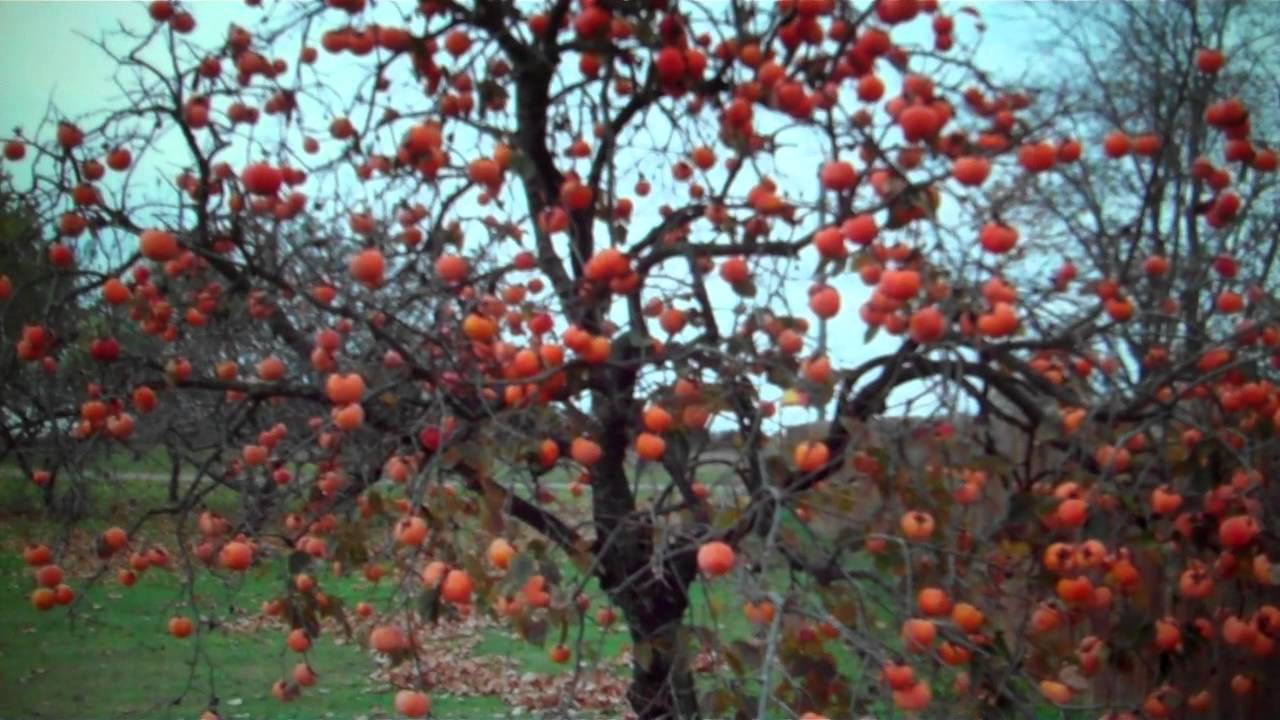
My favorite time of year in the Ozarks hills was always the spring (“green-up time” we called it) and we could look forward to squirrel hunting, fishing, swimming in the creek, and the myriad things we had to do besides chores when school was out for the summer.  The fall had its own attractions, however, when the leaves had turned to a riot of golden yellow and blazing red, the weather was cooler but with plenty of Indian summer sun, harvest was finished, and we could look forward to possum hunting when the first frosts came and the persimmons were ripe.
Persimmon tree

Even after the oats and wheat had been harvested and threshed, the field corn gathered and the stalks cut and made into tall conical shocks, there were fall chores to be done on the farm.  Some were fun—such as hog killing time—but the one that we really detested (that is an understatement—we hated it) was cutting a winter supply of firewood for the cast iron kitchen range and wood stove in the living room of our little house.

Ozark woodlot

Every Ozark farm had a “woodlot”—an acre or two of trees left when the farm was originally cleared—to furnish a supply of firewood.  Unfortunately, most of the trees in the Ozarks are hardwood; white oak, blackjack, burr oak, and the like, which is hard to saw and even harder to split.  Those hardwood trees made good, long-burning firewood, but getting them cut down, sawed up, and split was a real muscle builder.

We had never heard of chain saws in those days.  Our tools were a two-man crosscut saw that we called a “misery whip,” a good sharp double-bitted axe, a post maul, and a couple of steel wedges.  Dad would notch the base of the selected trees to control its direction of fall then, once we were into our early teens and had put on some muscle, Richard and I would go to work with that danged cross-cut to fall the tree.  When it was down, Dad would trim the limbs off with the axe and pile the brush for later burning while Richard and I sawed the tree into stove lengths.
We would cut wood in the fall after it had gotten cold because it was much too hot for that kind of work in the summer.  On frosty mornings we would go to the woods in our sheepskin coats but after a few minutes on that saw we would have to peel them off and, if the sun was shining, after a while our shirts, too.  It was onerous, sweaty work and it took a lot of passes of the crosscut to get through a log that was a foot and a half in diameter.
We bickered constantly, of course.  I would accuse Richard of not pulling his share and he would accuse me of “riding” the saw (putting on extra pressure when he was pulling it back his way).  We grew up fighting constantly but never came to blows in the woods because Dad was there and getting into a fistfight instead of working could result in a licking for each of us.
The worst licking Dad gave was out in the woods.  At home, when it was in order, he would use either his leather belt (if he wasn’t wearing overalls and had one on) or his razor strop which was also flat and really did not sting very bad (the real punishment was simply the ignominy of getting a licking) but out in the woods it was something else.
Buckberry

The Ozark underbrush includes a plant we called the buckberry bush.  It grows rather like spires with long and very limber limbs about as thick as a lead pencil.  There would be leaves and red berries all along the shoots.  I do not recall that the berries were good for anything unless the birds ate them as they were bitter as gall.
When a licking was in order (I am happy to say that was not very often for Richard and me), Dad would simply and without a word cut a buckberry shoot for or five feet long, run it through his closed fist to remove the leaves and berries, and wield it like a buggy whip.  When he was really mad that little limber buckberry limb would really whistle through the air and would wrap itself clear around your legs, leaving neat red welts that stung for quite a while.  It was better if Dad was only aggravated—the buckberry did not sing much and only stung for a little while.  If we happened to be wearing long underwear, it did not hurt much at all but we would let out a yelp anyway.

Thursday, June 16, 2016

Bona School the conclusion: Poetry, Shinny, and Spelling


Bona School 1937 Conrad is in the very back on the left, leaning on door jam.  A somewhat sullen look I recognize from his grandsons.

Bona School gave us a solid foundation in all the basics—English, mathematics, science, history, geography, etc.  The big advantage was that, since each class was so small (there were seventeen of us in my class and it was one of the larger ones), we got lots of individual attention from the teachers.  We also got a lot of lessons that were not in the curriculum, especially after Mr. Mitchell came there in 1934.  He always took advantage of our individual characteristics and got his points across.
Sometimes, to our dismay, Mitchell’s lessons were severe and could be embarrassing.  We were usually assigned homework for over the weekend.  On one occasion for English, Mitchell told us to write an original poem.  I thought that would be a snap and, as often happened, blithely put it off until Sunday evening.  When I finally got down to it words seemed to just pop into my mind as I put them on paper.  I had absolutely no recollection of having read or heard them anywhere.  As far as I was concerned they simply came to me.
Monday for our English recitation each of us had to stand up and read the poem we had written.  When my turn came I walked to the front and proudly read what I thought was a dandy poem.  It was about Heaven and Hell.  I do not now recall the first stanza but the ending was:
“The road to that bright happy region, is a dim narrow path so they say.
But the broad one that leads to perdition, is posted and blazed all the way.”
They seemed to like my poem and Mr. Mitchell reached to take the paper and I figured I would get an A; however, the Simmons sisters, Lois and Martha, were whispering to each other and then Lois’ hand shot into the air.
“Mr. Mitchell,” Louis said, “that is not Conrad’s original poem.  We got a new book of cowboy songs from the Grand Ol’ Opry the other day and that is in one of the songs in it!”  [indeed, Google lists it in a collection of Cowboy Songs and Ballads]
I froze in dismay and I could feel my ears getting warm as my face turned beet red in embarrassment.  I could not recall ever having heard the song, but I did listen to the Grand Ol’ Opry from Nashville one in a while on Grandpa’s radio and supposed that I could very well have then forgot until the words came back to me.  The whole room was looking at me and most of them were smirking perhaps because I was usually one of the ones who got the best grades, seemingly without effort.  There was some snickering.
“Well, now, Conrad,” Mr. Mitchell said in his mild way, “is that right?”
I tucked my head and stammered, “Well—I—uh—I dunno.  I suppose I might have heard it sometime on the radio, but I sure don’t remember and I know I never saw it anywhere.  I did not copy it from anything.”
“All right,” he said, “I am sure you are telling the truth, but there is a word that I think that everyone should remember.  I want you to write ‘plagiarism’ on the blackboard then get the dictionary and read the definition of plagiarize to the class.”
I did as he said, mis-spelling it when I left out “I”, then got the dictionary and read in a weak voice, “plagiarize—to appropriate and pass off as one’s own the writings, ideas, etc., of another.”
It was a mortifying and humbling experience.  That lesson stuck with me so well that thereafter I was so careful to write down only my own words that sometimes, as in a science report, I would not even quote a book when I could have, but would put the idea into my own words.  That resulted in the ideas and concepts being firmly implanted in my mind and sometime I could clarify what the author meant or improve on it.  I believe that Mr. Mitchell was fully aware of that.
The Bona School grounds were a full acre so there was plenty of room for our recess and lunchtime sports so we got plenty of exercise even though there were no organized sports activities.  Originally there had been backstops in front of the school and the school had a basketball team.  About the time we started there, however, the basketball backstops had rotted off and they were taken out and not replaced.  The men of the community built teeter-totters and swings on the south side of the building for the smaller children.  We who were older contented ourselves with games of longbase baseball and, in the large open area south of the school, shinny and football.
All of us boys played shinny, which is a version of field hockey.  We made our own shinny sticks by selecting a hickory sapling the right size and having a big root at the base that could be carved into a rough approximation of a wood golf club.  We always used an empty Pet Milk can for a puck.  That meant that eventually the game could get a mite dangerous the metal can would soon get beat into a compact, jagged ball of metal.  If you got a fair poke at it with that hickory shinny stick, it would fly through the air like a bullet and raise bruises and cuts.  It was necessary to duck in a split second sometimes. 
Shinny was also very good for footwork.  If a player did not have the knack of dancing out of the way, his bare ankles could get to be a mass of bruises and small cuts from either that beat up Pet Milk can or the opponents shinny sticks.  We certainly did not need Nintendo games for hand/eye coordination!
Our Bona School brand of football was we were playing it when Mr. Mitchell first came onto the scene could be a dangerous game as well.  It was an un-coached, rough and tumble, full tackle game without benefit of yard markers or referee.  We had not pads other than our overalls and shirt and a jacket and clodhopper shoes late in the fall when the weather got cold.  Our specialty was the flying tackle.  I only weighed a bit over a hundred pounds but when I took off full tilt and made a leaping dive at a larger ball carrier, he was almost guaranteed to get knocked off his feet and probably lose the ball.  You had to knock the ball away because we did not know about ten yards in four downs.
The first fall he was there, Mr. Mitchell came out to watch one of our lunch hour football games and was soon shaking his head in dismay.  He thought someone was going to get badly hurt although I do not remember any injuries beyond good bruises and fairly frequent bloody noses.  Of course you often got the wind knocked out of you but we took that as a matter of course and part of the game. 
Mitchell soon banned the flying tackles, insisting that we keep our feet on the ground at all times.  He taught us about touch football, yard markers, tec. But somehow the game just was not the same after that.  We privately agreed that he was making us play sissy football and began to lose interest.  One result was an increase in the number of good fist fights because we needed some way to work off our aggressions, I guess.
I look back fondly at my years at Bona School for many reasons—not the least of them being that I found it easy to be at the top of the class scholastically.  The reason was that I was very curious about everything and I wanted to learn everything I could.  I did not like to be wrong and I did not like not to know something.
None of the boys could match my grades (most of them just did not care) and almost none of the girls with the exception of Martha Simmons (who would go on to a career as a teacher) and Cook Neil’s daughter Mary.  For instance, almost invariably when were was a spell-down, it would be Mary Neil and me who would be the finalists and it was a toss-up as to who would trip up first—and sometimes it was me who went down first.  In retrospect, I am grateful that I had Mary Neil’s competition to spur me on—but I did not much like her at the time.

Wednesday, June 15, 2016

Bona School part 6: Scandouls behavior or a cry for help?


I have wrestled with the inclusion of this story.  It is disturbing to me as a woman and a daughter.  I do not fault my eleven-year-old father for not interpreting the scenario (although a modern day boy might), but I am grieved that fifty years later the same misogynistic views of 1933 colored his re-telling of it.  If it serves no other purpose, perhaps like the story of Black George earlier, it may spark conversation and assessment of how far we have or have not come.


Mr. Hardesty, who preceded Mr. Mitchell as principal of Bona School, was not the same caliber teacher as Mr. Mitchell and very firmly believed in corporal punishment.  He kept a long paddle, perforated with holes on the business end so that it would sting more, propped in a corner behind his desk but plainly visible.  It was no idle threat—he could wield it mightily when it was justified.

I recall one case that Hardesty had to deal with.  In 1933 a thirteen or fourteen-year-old girl came from a city somewhere to stay in the area with her aunt.  Her name was Blanche Irene Mitchell (no relation to Mitchell the teacher who came to Bona later on).  Blanche was a husky, nubile girl with carrot-red hair and—as it turned out—an obsession with sex.  She had a kind of obnoxious personality and none of the boys were very strongly attracted to her.  I do not believe that she had any real girlfriends wither.  On Valentine’s Day she got more nasty comic valentines than anyone else.

The rocky, dusty country road that ran through Bona and past the schoolhouse was upgraded to a “farm-to-market” road in 1933 or 1934 and there were quite deep ditches bordering the gravelled road along the school grounds.  One recess one of the teachers walked out to the road and caught Blanch Irene in the ditch “nursing” one of the kids from the Little Room.  That, of course, was scandalous and intolerable conduct and Blanche was informed that she was to stay after school and see the principal.

That afternoon Mr. Hardesty procured a new limber slat of wood from the coal shed and sat all afternoon at his desk whittling a new paddle.  It was about three feet long, two inches wide, and was quite thin.  He finished drilling some holes at the end just before school let out.

Of course word had quickly gotten around and everyone was curious to know if Hardesty would whip Blanche Irene.  To our knowledge no girl had ever gotten a whipping.  Blanch had sat in fear and trembling all afternoon watching Hardesty whittle on that paddle.  It was my brother Richard that found out what went on.  On the pretext of cleaning erasers and blackboards, Richard tarried after school and managed to hide in the Middle Room behind the moveable partition so he could hear what went on.

Richard reported that Mr. Hardesty simply said, “Well, Blanche Irene, you know that what you were doing was dead wrong.  I am going to give you a choice—you can either take a proper whipping that you deserve or, if you don’t, you will be expelled from Bona School.  It is up to you.”

Between sobs, Blanche said miserably, “I can’t take a whipping, Mister Hardesty, so I guess I am expelled.”

We learned later that Blanche Irene had come to Bona to stay with her aunt and go to school because she had been expelled from a city school when she got caught in the furnace room having sex with the janitor.  I have no idea where they sent Blanch Irene next but that was the last we saw of her in Bona.

I have sometimes wondered what Mr. Hardesty would have done had he known about the times Blanch let some of us boys look down the neck of her dress to see if her boobs were real (they were) or, especially, if he knew about the times on the way home from school that Blanche Irene sneaked into an old corncrib about half a mile from school with Keith Carnes or one of the other older boys.  The ones she had done that with were relieved when she left town because she was always being sweetly coquettish around them and they were afraid she would wind up pregnant.  None of them wanted to be Blanche’s beau and they sure did not want to be trapped into marrying her because she got herself knocked up.

I have so many problems with this episode of my father’s memoir that it’s hard to know where to begin.  Although he seems to reflect on what if Mr. Hardesty had whipped Blanche and what if Blanche “had gotten herself knocked up” as though she alone would have been responsible, even writing fifty years later, he does not reflect on what might have caused Blanche’s behavior.  Promiscuous children, almost without fail, have been sexually molested by a trusted adult.  We don’t know Blanche’s back story except that she had been expelled from a city school for her behavior.  Had a father or a step-father or an uncle or friend robbed her innocence?  My father writes that Blanche had no real friends and was finding “love” and validation in all the wrong places.  Fifty or seventy years later, a school councilor would have gotten Blanche so help.  We can only speculate on what went on to happen to her, but my heart aches for that girl as I cannot imagine a good outcome for her.

Tuesday, June 14, 2016

Bona School part 5: Lesson of a School Play


An outfit similar to what might have been worn by the author for his school play

I never forgot one lesson that I learned at Bona School that stood me in good stead in later years when my career at Boeing got me involved in public speaking.  One of the school plays that we put on around 1933 or 1934 involved some skits that depicted going to school in an 1880s’ schoolroom.  I was to be dressed in a homespun shirt and old time short pants.

My mother found some authentic clothes for me to wear.  Pour neighbor Bertha Beck had a truck full of old clothes from the time when her father was a boy.  She loaned me a pair of short homespun pants, a pair of galluses, and an old-fashioned white shirt.  The skit called for my pants to have a big ragged hole in the seat.  Of course Bertha did not want her father’s pants ruined so my mother loosely pasted on a piece of white cloth.  In the light of those few gasoline lanterns she figured that the audience would not know the difference and it turned out that it worked great.

I do not recall the point of the whole skit but there were several of us in it.  When my turn came I stood up in my clodhopper shoes (I was wearing a pair of my father’s work shoes so they really looked clumsy) and faced the audience to recite a ditty.  As my grandmother once said, I could not carry a tune in a milk bucket so I sort of chanted:

“Nine o’clock spelling lesson just begun,

Johnnie throws a spitball—just fer fun,

Hits the teacher’s ear with an aw-ful splat—

She turns around and says, ‘Now who did that!’

“Jonnie’s told to stand up with his face to the wall,

He says ‘I dowanna’ and he tries to stall.

If’n I stood up there I’d take an aw-ful chance—

Cause I gotta big hole in the seat of my paints!”

During the punch line I turned my back to the audience, bent over so they could see the fake hole, and peered at them through my spread-apart legs.  I had sweaty palms the whole time but it turned into a very gratifying moment.  Everyone laughed, applauded, and there was even a whistle or two.  I could feel my somewhat oversize ears getting red from embarrassment as I stood and bowed stiffly as I had been instructed to do.  I left the stage with a very good feeling about getting up in front of people.  It gave me confidence that would stand me in good stead later on as a commencement speaker, lead in my high school paly in 1939, and—much later on—in public speaking literally all over the world.

My mother’s idea about the fake hole in the seat of my pants worked so well that, after the program, Bertha Beck came around a bit upset that we had ruined her daddy’s pants by tearing a hole in them.  She was quite relieved when I showed her that it was just a piece of an old handkerchief basted on.

The deep impression that little performance made on me is probably why, after all these years, I am able to recall every word of my little ditty.

Although short, this episode give me a lot to think about as my father's great-grandchildren have been in several plays.  What influence of that will we see down the road?

Monday, June 13, 2016

Bona School part 4: Intrigue at a Pie Supper


I mentioned at the beginning of this chapter that Bona School was sometimes used for social events and sometimes for a fund raising “pie supper.”  I suspect that it has been a good number of years since the last pie supper was held anywhere.
Woman placing her pie (maybe hers) with others for

A pie supper was actually an auction with the proceeds going to the school fund.  When one was scheduled, all the ladies and girls in the community would bake their favorite pie.  They would then put the pie in a box and decorate the box with fancy crepe paper, ribbons, and bows.  The idea was that when the pies were auctioned the bidder would not know whose pie it was or what kind it was.  After the auction was over, the successful bidders would sit down and eat the pie with whoever it turned out had baked it.
This auction winner looks like he wants to take a bite out of her!

Maintaining secrecy resulted in some spirited maneuvering.  The girls would often trade pie boxes before carrying them to the school or else would cover them with a newspaper or a grocery sack.  In turn us boys had a regular spy network to attempt to determine in advance which pie box belonged to whom.
The whole thing would get complicated since boys and young adult males wanted to bid on their girlfriends’ pie since they were going to eat with the baker.  Conversely, they did not want anyone else to know.  (I suspect that, in some cases, the girls simply told in advance but not usually as that would take all the fun out of it.)  A couple of years I had a pretty good crush on Betty King Lindley and wanted her pie.  She was best friends with my cousin Mary Catherine, and I figured they would carry each other’s boxes so I bid on the one Mary Catherine had carried in.  I was right.  I ate pie with Betty King.
Another time I decided that I wanted to buy the pie of cute little Betty Lou Long (she was pretty as a spotted pup) but she was two grades behind me in school and I did not want anyone to know that I was sort of sweet on a girl that young.  I got a peek at the box Betty Lou’s mother carried in and bought it.  Of course I pretended to be very surprised when it turned out to be Betty Lou’s pie.

As you might well imagine from my comment about his nature, Richard one time came up with a scheme to make a little money on the side at a pie supper.  Got him in trouble, too.  He was in cahoots with our first cousin James Lowell Tygart.  The two of them volunteered to direct traffic in the schoolyard where folks would park their Model T’s, wagon, or buggy as the case might be.  The idea was that they would get a peek at the boxes, figure out who was carrying whose pie, then they would sell that information for a dime to the fellow that wanted a particular pie.
It worked out pretty well at first.  By the time the auction had started they had collected maybe a dollar between them.  It was afterward that they got their comeuppance.  Jaycee Lindley, who had already graduated from Dadeville High and was full grown, wanted his sweetheart’s pie but she coyly would not tell him what the box looked like.  Jaycee paid Richard to tell him which box it was and old Dick solemnly assured him what it looked like.  Well, Jaycee bought the wrong box and wound up eating pie with the widow, Bertha Beck, who lived across the road from us south of Bona.
Jaycee was mad, of course, because he had wasted a dime on Richard’s information.  He was a good sport about eating with Bertha (she made great apple pie) but afterwards he cornered Richard out by the coal shed, demanded his dime back, and was going to beat the tar out of Richard.  I did not think that was quite a fair fight so, when I didn’t see James Lowell making any effort to help Richard, I sort of dived at Jaycee from behind and knocked his legs out from under him just as he was reaching for my brother.  Before Jaycee could get to his feet we had disappeared into the darkness.  Jaycee was pretty big and I was glad that he was not one to hold a grudge—he just laughed about it later.